
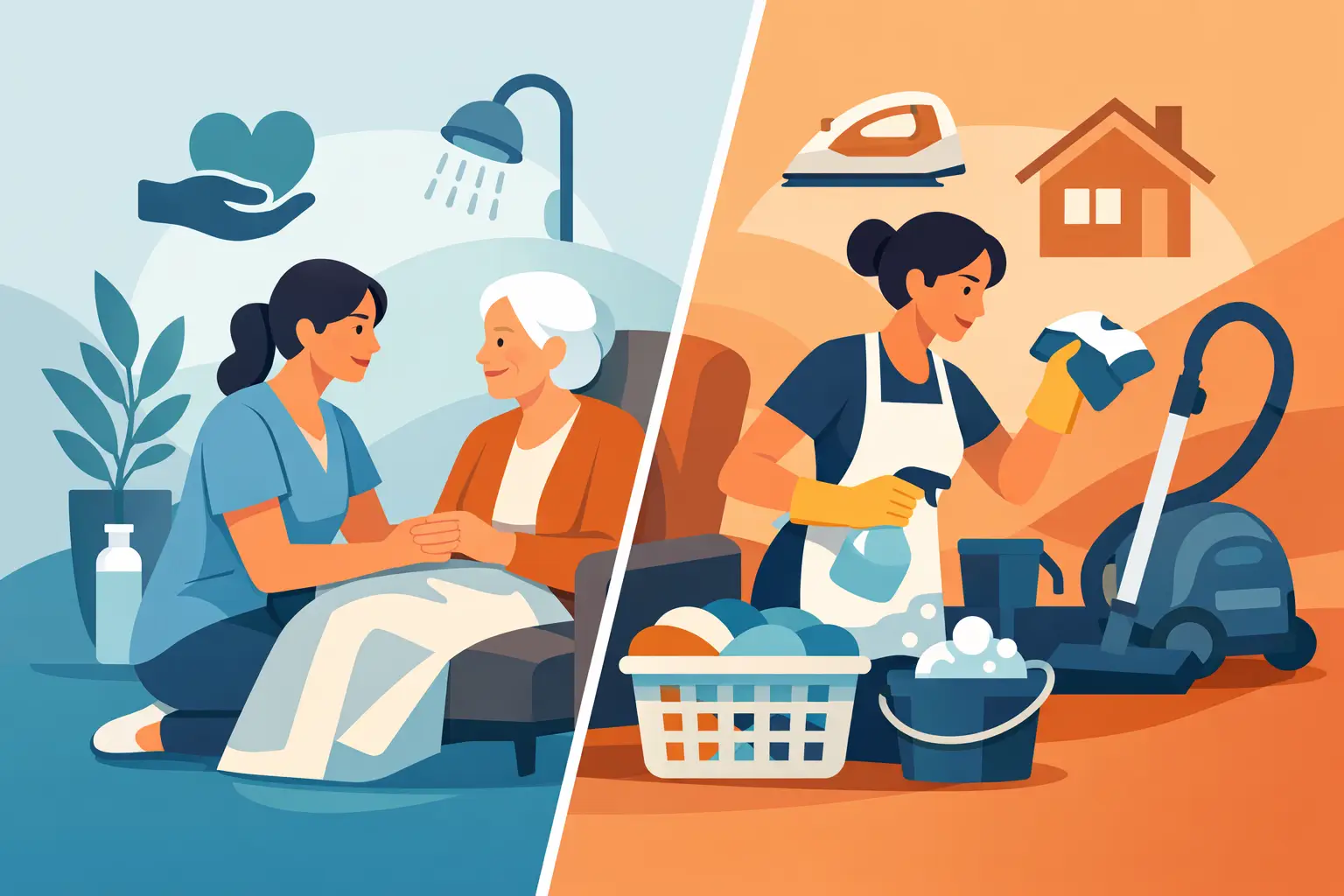
A family may begin by asking for help with cleaning or meals, then realise that their parent also needs assistance getting safely dressed or washed. That is where the distinction between personal care versus domestic help becomes essential. Both can make life at home more manageable, but they serve different needs, call for different skills and should be agreed clearly from the outset.
Getting the right support is not about finding someone to do every task. It is about arranging care that protects the person’s dignity, supports independence and gives family members confidence in the day-to-day plan.
What personal care means
Personal care is direct, hands-on support with a person’s body, routine and wellbeing. It is often needed by older people, people living with a disability, someone recovering after illness or surgery, or anyone whose mobility, memory or health makes everyday self-care difficult.
This support may include help with washing, bathing or showering; dressing and grooming; toileting and continence care; moving safely between a bed, chair or bathroom; and eating or drinking where assistance is needed. A caregiver may also provide companionship, encourage a regular routine and observe changes that a family should know about.
The quality of personal care is measured in more than practical outcomes. A person may feel vulnerable when they need help with intimate tasks. The caregiver’s approach matters: asking permission, explaining what will happen, respecting privacy, allowing enough time and encouraging the person to do what they can for themselves.
Personal care is not the same as clinical or nursing care. While a caregiver can offer valuable daily support and raise concerns when something changes, medical procedures, complex medication management and clinical decisions may require a suitably qualified health professional. Families should be open about the person’s health needs before engaging a caregiver, so that the right level of support can be arranged.
What domestic help covers
Domestic help, sometimes called homemaking support, focuses on the household rather than direct bodily care. It helps keep the home safe, comfortable and functional when a person cannot manage all the usual tasks alone.
Typical duties can include preparing simple meals, washing dishes, laundry, light cleaning, changing bed linen, shopping for household essentials and keeping living spaces organised. For someone who is frail or recovering, these tasks can make the difference between coping at home and feeling overwhelmed by it.
A domestic helper may also offer practical companionship: sharing a cup of tea, helping someone prepare for a visitor or making sure the kitchen is stocked. However, families should not assume that domestic support includes bathing, lifting, toileting or other personal-care tasks. These duties need the right experience, clear consent and appropriate boundaries.
Domestic help is also not a licence to expect every possible household job. Heavy lifting, work at height, deep cleaning, gardening, childcare, driving or caring for pets should be discussed separately. A clear role protects both the household and the person providing support.
Personal care versus domestic help: the key difference
The simplest distinction is this: personal care supports the person; domestic help supports the home. In real life, though, the two often sit alongside one another.
Consider an older man who can wash and dress independently but finds standing at the stove tiring and struggles with laundry. Domestic help may be enough. Another person may have a clean, well-run home but need assistance getting safely into the shower and putting on compression stockings. That points to personal care.
Many families need a blend. A caregiver might help a client get dressed, prepare breakfast, change the bed linen and stay for conversation. What matters is that each task has been discussed, the caregiver is comfortable and suitably experienced, and the schedule leaves enough time to provide unhurried care.
The distinction becomes particularly important when needs change. A short period of domestic support after a hospital stay may later need to include personal care if mobility does not return as expected. Reviewing arrangements early can prevent rushed decisions after a fall, illness or difficult night.
How to identify the support your family needs
Start with the person’s actual day, not a vague request for “a helper”. Think from waking up to bedtime. Where do they manage well? Where do they hesitate, take risks or need someone nearby?
It can help to consider four areas: personal routines, mobility and safety, household tasks, and companionship. Is help needed with bathing or dressing? Can the person move safely around the home, use the toilet and prepare food? Are meals, laundry and cleaning being neglected? Are they isolated, anxious or forgetting parts of their routine?
Then consider frequency. Some households need two hours of homemaking support once or twice a week. Others need morning personal care every day, support after meals, overnight supervision or a combination of regular visits. The right arrangement depends on the individual, the home environment and the support already available from family and friends.
It is wise to involve the person receiving care wherever possible. Even when an adult child is arranging the support, the person’s preferences should guide the plan. They may have strong views about the time they wake, how they like their tea, who helps with personal tasks or which rooms are private. Listening to those preferences is part of respectful care.
Questions to agree before care begins
Before the first visit, put the essential details in writing. This does not need to feel cold or formal. It gives everyone a shared understanding and reduces the chance of disappointment.
Discuss the duties expected, the days and hours required, whether personal care is involved, any mobility equipment in use, meal preferences, allergies, communication needs and who to contact if there is a concern. Explain household routines, access arrangements and any areas that are off limits. If the caregiver will be asked to accompany the person into the community, agree how transport, appointments and expenses will be handled.
For personal care, be especially clear about safe moving and handling. A caregiver should never be expected to lift someone in a way that puts either person at risk. If the person needs support to transfer from bed to chair, or has frequent falls, assess whether equipment, additional assistance or clinical guidance is needed.
Choosing a caregiver with confidence
Trust is central when welcoming someone into a home. Families should look beyond a simple list of duties and consider whether a caregiver’s experience matches the role. Someone skilled in housekeeping may not be the right person for intimate personal care, while a compassionate care worker may not be seeking a cleaning-focused position.
Ask about relevant experience, availability, communication style and comfort with the specific tasks involved. Check references where appropriate, and pay attention to how the person speaks about dignity, confidentiality and professional boundaries. Reliability matters, but so does the ability to respond calmly when routines change.
For caregivers, clarity is equally important. Do not accept work that falls outside your training, experience or agreed role simply because a family is under pressure. Raise concerns early, document important instructions and ask for guidance when a task becomes unsafe or inappropriate. Professional care includes knowing when more support is needed.
A structured care platform such as Community Care Access Centre can help Cape Town families and caregivers connect around clearly defined needs, with profiles, communication tools and professional standards that support a more accountable arrangement.
When a care plan needs to change
Care arrangements should not be treated as fixed forever. A person’s condition, confidence and household circumstances can change quickly. If there are new falls, unexplained weight loss, confusion, skin concerns, difficulty swallowing, increasing incontinence or a marked change in mood, the family should seek appropriate professional advice and reassess the support in place.
Sometimes the change is positive. A person recovering from surgery may move from personal care to lighter domestic help as strength returns. The aim is not to provide more assistance than necessary, but the right assistance at the right time.
A brief regular check-in can make a meaningful difference. Ask the person receiving care how they feel about the arrangement, ask the caregiver whether the tasks remain manageable, and adjust the plan with honesty and kindness. The best support allows a home to remain a place of familiarity, dignity and connection - not just a place where tasks get done.